Rental scams in the Netherlands: 9 warning signs
Scarcity makes renters fast, and scammers count on it. The warning signs of a fake listing, the checks to do before you pay, and what to do if it already went wrong.
You finally find it. A bright apartment in a good neighbourhood, a fair rent, available next month. You send a message within minutes. The landlord replies quickly, friendly and in perfect English: he’s abroad for work, so a viewing isn’t possible right now, but if you transfer the deposit today, he’ll send the keys by courier.
That is almost word for word how many rental scams in the Netherlands start. And they work, because the market makes us desperate. When good homes are gone within hours, the urge to act fast is exactly what scammers count on.
This guide shows the warning signs, the checks you can do in ten minutes, the rules that protect you, and what to do if it already went wrong.
Why rental scams are so common in the Netherlands
There are far more people looking than there are homes available. In the free sector, the number of rentals is still roughly half of what it was between 2015 and 2022, and good listings regularly draw hundreds of responses. That pressure makes people skip steps they would normally never skip.
Scammers have also become better at it. Fake listings used to be easy to spot because of clumsy language. Researchers at Erasmus University Rotterdam warn that AI now lets scammers write polished, convincing texts in any language. The old rule of thumb, “bad spelling means fraud”, no longer works.
In short: scarcity creates time pressure, and time pressure is a scammer’s best friend. The fix is a few fixed checks you always do, however good the place looks.
9 warning signs of a fake rental listing
- The price is too good for the location. A spacious apartment in the city centre for the price of a small studio is the classic bait. Compare with similar homes nearby.
- You can’t view the home. The landlord is “abroad”, “ill” or “too busy”, and offers a video, a contract or keys by post instead.
- You’re asked to pay before a viewing or contract. A deposit, “reservation fee” or first month’s rent to “secure” the home before you’ve seen it.
- Pressure to decide now. “Ten other people are interested, whoever pays first gets it.”
- Unusual payment methods. Crypto, gift cards, money transfer services or a foreign bank account. Money sent this way is almost impossible to get back.
- A request for a copy of your passport early on. Scammers use ID copies for identity fraud, or to make their next victims trust them.
- Fees that aren’t allowed. Agency fees, “administration costs”, “contract costs” or key money, when the agent works for the landlord.
- The same photos appear elsewhere. Copied listings reuse real photos, sometimes from a holiday rental or a listing in another city.
- The conversation moves off the platform. From the rental site to WhatsApp or private email, where the platform can no longer warn you.
The 10-minute check before you pay anything
1. View the home in person
Always see the home before you sign or pay, and make sure the person showing it actually has access to it. If you really can’t be there yourself, ask someone you trust to go.
2. Check who owns it
The Kadaster (Land Registry) lets you look up who owns an address for a few euros. Does the owner match the person you’re talking to, or do they have a written mandate from the owner? A landlord who refuses to explain is a red flag.
3. Search the photos, address and contact details
Use a reverse image search on the photos and search the address, phone number and email address together with words like “fraud” or “scam”. Copied listings often show up quickly.
4. Check the agent and the bank account
Look up a letting agent in the KvK (Chamber of Commerce) register, and call them on a number you found yourself, not the number in the listing. The police offer an online check where you can see whether an IBAN, phone number, email address or website has been reported for fraud.
5. Protect your ID
Only share an ID copy with a landlord or agent you have verified, and use the government’s KopieID app to cross out your citizen service number (BSN) and photo and add a watermark saying who it’s for.
6. Pay safely
Pay by bank transfer from your own account, keep proof of payment, and only after you’ve seen the home and have a signed contract. Never pay with crypto, gift cards or a money transfer service.
In short: view first, verify the owner and the account, protect your ID, and only pay by bank transfer after signing.
The rules that protect you as a tenant
Since the Good Landlordship Act (Wet goed verhuurderschap) came into force, tenants in the Netherlands are better protected. A few rules are especially useful when you’re checking whether an offer is legitimate:
- Deposit: for contracts since 1 July 2023, the deposit may be at most two months’ basic rent. The landlord must return it within 14 days after the lease ends, or within 30 days if there are deductions for damage or unpaid rent.
- Agency fees: if an agent works for the landlord, the landlord pays the agent. The agent may not also charge you.
- Written contract: rental agreements must be in writing, and landlords must give you written information about things like the deposit, service costs and who to contact.
- Transparent selection: landlords must explain how they select tenants, and they may not discriminate.
- Somewhere to report: every municipality has a reporting point (meldpunt) for tenants and home-seekers with complaints about landlords.
So if someone asks for three months’ deposit, a “contract fee” or payment before there’s a contract, that alone is a reason to stop.
Already paid? Act fast
- Call your bank immediately using the number on their website or in the app. Ask them to stop or recall the payment. The sooner, the better the chance.
- Stop paying. Scammers often come back with “one more fee”. Don’t respond.
- Save everything: the listing, screenshots, messages, payment proof, the contract and a short timeline.
- Report it to the police. You can do this online with DigiD or by calling 0900-8844.
- Report it to the Fraudehelpdesk, especially if you shared a copy of your ID, so they can advise you on preventing identity fraud.
- Tell the platform where you found the listing, so it can be removed and others are warned.
How to stay fast without taking risks
The tricky part: being quick is exactly what you need in this market, and exactly what scammers abuse. The answer isn’t to be slower. It’s to be prepared, so speed never depends on skipping checks.
Have your documents ready (with KopieID), a short motivation letter you can adapt in a minute (see how to write a rental motivation letter), and know which questions you’ll ask every landlord. Then you can respond within minutes and still check everything before money changes hands.
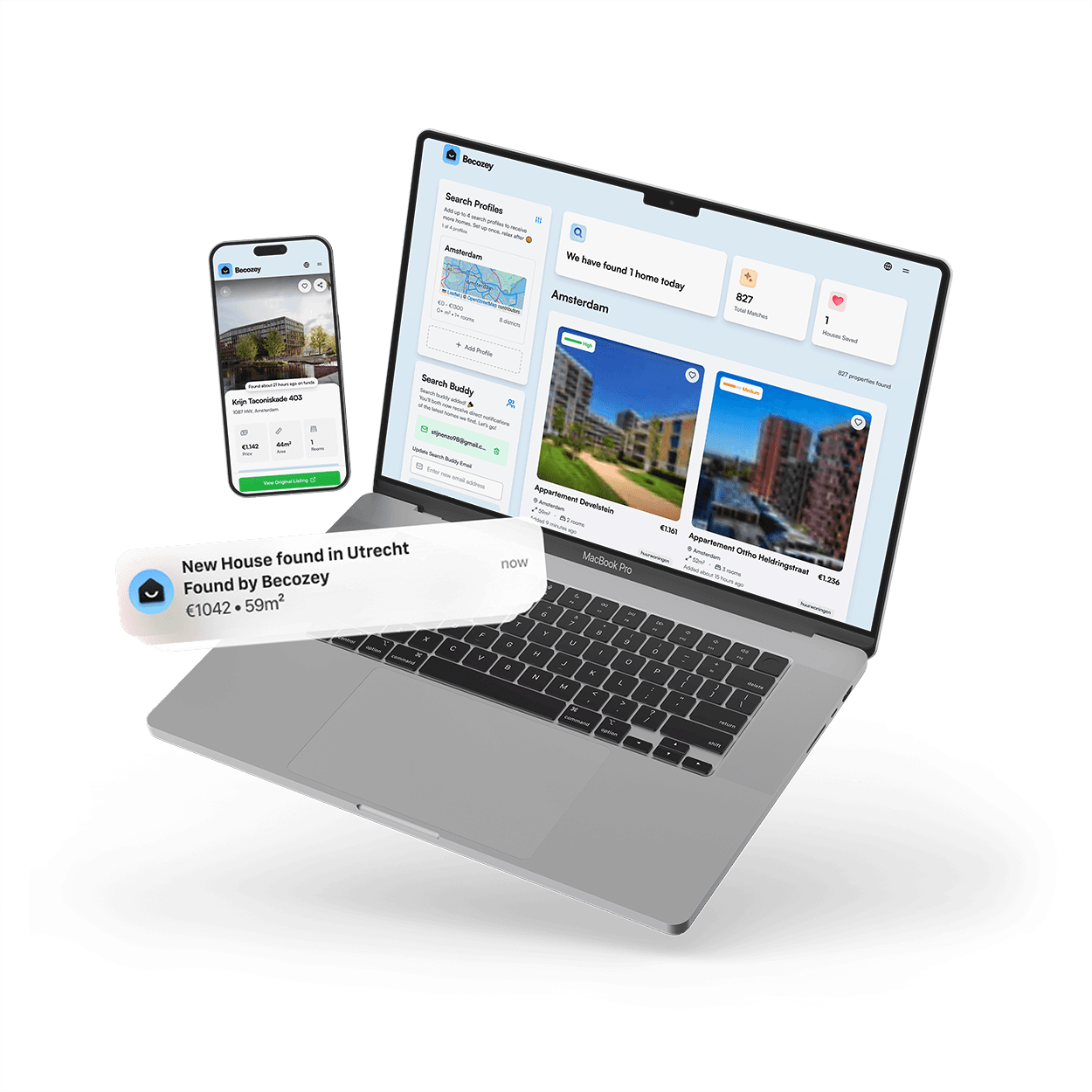
Becozey helps with the first part: it scans 1,000+ Dutch rental websites and alerts you as soon as a matching home appears, so you’re early without having to refresh ten sites. The check before paying always stays your job.
Frequently asked questions
How can I tell if a rental listing is fake?
Watch for a price that’s too good for the location, a landlord who can’t show the home, requests to pay before a viewing or contract, pressure to decide immediately, unusual payment methods and photos that also appear in other listings. One of these signs is a reason to check carefully; several together almost always mean fraud.
Is it normal to pay a deposit before viewing a home?
No. A legitimate landlord or agent lets you view the home first and gives you a written contract. Only pay the deposit and first month’s rent after viewing and signing, by bank transfer from your own account.
How much deposit can a landlord ask in the Netherlands?
For rental contracts since 1 July 2023, the deposit may be at most two months’ basic rent, meaning rent excluding service costs. The landlord must return it within 14 days after the lease ends, or within 30 days if there are deductions.
Can a letting agent charge me fees?
Not if the agent works for the landlord. In that case the landlord pays the agency fee, and charging the tenant as well isn’t allowed. Fees you paid that weren’t allowed can often be reclaimed.
Should I send a copy of my passport to a landlord?
Only once you’ve verified the landlord or agent, and preferably through the KopieID app, which lets you hide your BSN and photo and add a watermark stating who the copy is for and why.
Where do I report rental fraud in the Netherlands?
Contact your bank first to try to stop the payment. Then report it to the police (online with DigiD or via 0900-8844), to the Fraudehelpdesk, and to the platform where you found the listing. Complaints about real landlords can go to your municipality’s reporting point.