Negotiating rent: what I wish someone had told me sooner
Five moves, five negotiations, and something new learned every time. About rent prices, rental agreements and why you have more room as a tenant than you think.

I’ve moved five times in ten years. And every time, I learned something new about negotiating rent, usually by getting it wrong. The speed of the market. The competition. The feeling that you have three minutes to decide whether you want to live somewhere for the next two years. But what I completely missed the first few times: you don’t have to simply accept what’s in the listing.
Negotiating rent feels awkward. Almost as if you’re asking for something you’re not allowed to ask for. But you are. And it pays off more often than you think.
Why negotiating rent is worth it
The first time I tried to negotiate, I got it completely wrong. I sent an email saying “could the rent come down a little?” and waited. No reply. Well, actually there was one: the place was rented to someone else the next day.
What I didn’t realise back then: negotiating isn’t asking for a favour. It’s just a conversation between tenant and landlord. And you can prepare for that conversation.
The win isn’t always a lower monthly rent. Sometimes it’s a rent-free first month. Sometimes it’s a more flexible notice period, which to me is worth even more than ten euros less a month. Sometimes it’s simply the landlord fixing that leaking tap before you move in instead of three months later. And sometimes it’s a combination of small things that add up to a few thousand euros over a year.
In short: negotiating rent pays off because the outcome is rarely just about the price. A rent discount is one option, but better terms in your rental agreement can be worth just as much.

When does negotiating rent actually work?
As a tenant: recognise the moments when you’re in a stronger position
Honestly: not always. I’ve tried negotiating in situations where it was simply hopeless. An apartment in Amsterdam-Oost, three viewings in one day, and the landlord looked at me as if I’d asked to live there for free.
But there are situations where you, as a tenant, really do have room.
If a property has been empty for a while, every extra month of vacancy costs the landlord money. In a quiet season, there’s less competition. If you’re the only serious candidate, your negotiating position is stronger than you might think. And then there’s the factor people underestimate: what you bring to the table. Quick availability, good references, a stable income, handing over all your documents straight away. A landlord who sees that you’re calm and organised is more willing to discuss the rent.
In short: your chances are best when there’s little competition, the property has been vacant for a while, or you can offer something extra such as moving in quickly or strong references. In quieter periods of the year, landlords are usually more open to a proposal.
What to know about rent prices and tenant protection before you negotiate
This is the part I read too late myself. Not because it’s exciting, but because it makes a difference the moment you sit down at the table.
The Netherlands has two worlds: social housing and the private (“free”) sector. In social housing, rent is regulated through the property valuation system, also known as the points system. The rent depends on the quality of the home and there’s little room to negotiate the price itself. In the private sector there is room, and that’s what this article is about.
What many people don’t know: since 2024, the Affordable Rent Act (Wet betaalbare huur) applies. It means that part of the mid-rent segment, homes that score below a certain number of points, can also fall under regulated rents. As a tenant you can have this checked by the Rent Tribunal (Huurcommissie). That’s relevant if you suspect you’re paying too much for a home that may not belong in the private sector at all.
Then the deposit. For private rentals it is legally capped at two months’ basic rent. That has been the case since 2023. If a landlord asks for three months, you can simply say that isn’t allowed. You don’t need to be confrontational about it, but you don’t have to just accept it either.
And something expats and anyone who wants flexibility should know: since July 2024, temporary rental contracts for self-contained housing are no longer possible in most cases. Landlords can almost only rent out for an indefinite period. That means you have more protection as a tenant than before, but also that you can’t assume a temporary contract is the norm.
I don’t know this because I’m a lawyer. I know it because I once paid a three-month deposit without knowing that wasn’t actually allowed, and because a friend of mine signed a temporary contract that should no longer have been offered legally. Since then, I read the small print. Or at least the big print.
How to prepare for a rent negotiation
Do your market research as a tenant
This is where most people go wrong. They walk into a viewing with no idea of the market price, no file and no plan. And afterwards they’re left thinking about what they could have said.
This is how I do it now.
I always look up comparable homes in the same neighbourhood. What does a similar size cost, in similar condition, in a similar location? That gives me an anchor. Good market research means you know whether the asking rent is fair, or whether there’s room. Without that anchor, you’re negotiating in a vacuum.
Then I make sure my documents are in order before I even go to a viewing. Payslips, an employer’s statement, a reference from a previous landlord. It sounds bureaucratic, but a landlord who sees you have everything ready visibly relaxes. They think: this won’t be a hassle.
And then I decide what I actually want. Sounds simple, but it isn’t. Do I want lower rent? Flexibility? Repairs done before I move in? You can’t ask for everything. So I decide in advance what really matters to me and what I can let go of. If you don’t, you’ll give in on the wrong things during the conversation.
Strengthen your position with alternatives
One strategy that always helps: make sure you have alternatives. In negotiation jargon that’s called a BATNA, but the idea is simple. If you have two other viewings lined up, you’ll be more relaxed in the conversation. And it shows. If this is your only option and you need somewhere to live next week, that shows too. Landlords pick up on it. So you build a strong negotiating position not only during the conversation, but before it.
In short: know what comparable homes cost, have a complete file ready and decide your priorities in advance. Then you’re stronger in every conversation about the rent or the terms.
How to discuss the rent with a landlord
This is where it counts. Because no matter how well prepared you are, if you start the conversation the wrong way, you won’t get anywhere.
Don’t open with “can the rent come down?”. That’s a yes-or-no question, and the answer is almost always no.
Ask open questions. “What matters most to you in a new tenant?” or “Is there room to look at the terms together?” are very different conversation starters. You learn what the landlord wants, and then you can respond to it.
Think in packages, too. Not: “I want 50 euros less per month.” But: “I can move in tomorrow and hand over everything right away, would that make a difference to the price?” Or: “I’m willing to sign an eighteen-month lease if we can agree on a lower monthly rent.” Asking for lower rent goes much more smoothly when you offer something in return.
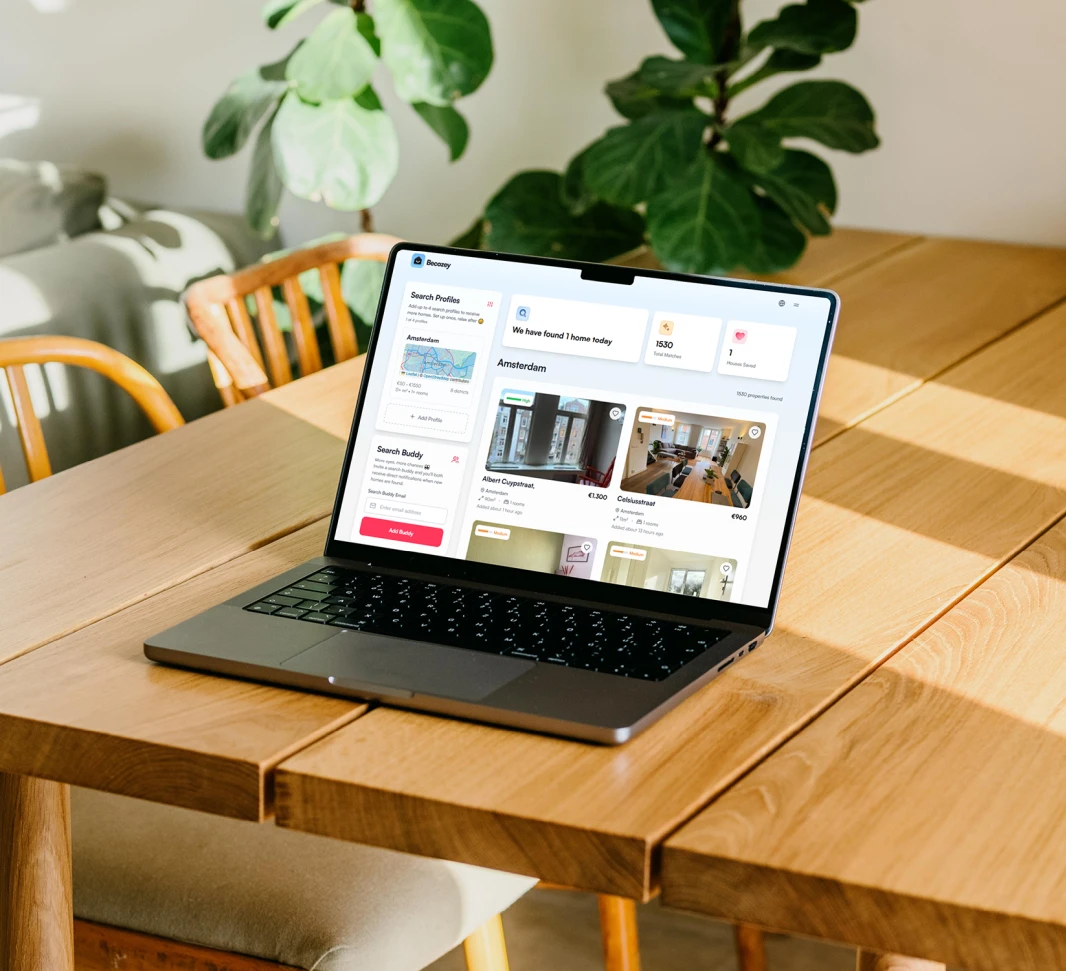
Speed really matters. If you send an email with all your documents attached within two hours of the viewing, while the next candidate does so three days later, you stand out. Landlords don’t like uncertainty. Responding quickly and completely builds trust. I use Becozey to follow new listings the moment they appear, so I can be one of the first at a viewing in the first place. Because if you’re too late, there’s nothing left to negotiate.
What does a rent negotiation email look like?
This isn’t the perfect script. But it gives you an idea of the tone.
Dear [name],
Thank you for the viewing of [address]. The home is a great fit for what I’m looking for.
I’ve looked at comparable homes in the area and wondered whether there’s room to discuss the monthly rent a little. As an alternative, I can offer an eighteen-month rental agreement, and I can provide all documents today.
Kind regards,
Lotte
Short. Concrete. Just a proposal.
Negotiating rent with different types of landlords
Private landlord: trust over speed
With a private landlord, it’s much more about trust and personal contact. They want to know who will live in their home. Offering a long-term relationship often helps more than a sharp offer. You negotiate this kind of lease with a personal tone, not a spreadsheet.
Letting agent: speed and completeness are your weapons
To a letting agent, you’re a file. Speed and completeness are your best weapons. Make sure everything is correct, send everything quickly and stick to deadlines.
Housing corporation or institutional landlord: focus on the terms
With a housing corporation you usually have little room on the rent itself. But you can sometimes negotiate move-in dates or maintenance items. With an institutional investor or large rental company: be professional and organised. These parties are process-driven. They don’t appreciate surprises.
Speed and technology in rent negotiations
I can’t stress this enough. In the Dutch rental market, especially in the cities, good homes on the big platforms are sometimes gone within two hours. No joke.
I use Becozey to keep track of what comes onto the market. It scans more than a thousand rental websites every day and alerts you as soon as something appears that matches your preferences. That may sound like a luxury, but in practice it means I’m one of the first to respond. And responding earlier means you schedule the viewing, have the conversation and make your proposal while others are still scrolling.
That’s no small advantage.

Tips for expats and first-time renters: negotiating as an outsider
If you’re new to the Netherlands or just starting out, the rental market is extra overwhelming. A few things that really help.
Be open about your situation. If you need a home quickly because you’re starting a new job, just say so. Landlords understand. And it also explains why you’re making decisions so fast.
An employer’s letter or a bank guarantee can replace a higher deposit. It gives the landlord security without you having to put down two months’ rent straight away. For expats, this is often one of the easiest ways to strengthen your position without haggling over the rent.
And if your situation is uncertain, ask for a shorter notice period or a flexible clause in the rental agreement. Landlords don’t always agree, but it’s always worth asking.
Mistakes I made myself when negotiating rent
- Responding too late. I wanted to sleep on a place, and the next morning it was gone. Never again.
- Negotiating without knowing what I wanted. I asked for lower rent, the landlord said no, and then I didn’t know what else to say. Preparation really isn’t optional.
- Not getting things in writing. A landlord promised to have the bathroom painted before I moved in. It wasn’t in the contract. The bathroom was never painted.
Put everything in the rental agreement. Everything.
Negotiating rent in practice: three real examples
A studio in Amsterdam
A friend of mine found a studio through Becozey before it was widely advertised. Several people were interested, but he was one of the first to respond, had his documents ready and offered to pay two months in advance in exchange for one month’s rent discount. The landlord agreed. Speed plus preparation.
A family home that had been empty for three months
A terraced house, on the market for three months without a tenant. The tenant proposed a two-year contract and offered to do some small painting jobs himself. The landlord preferred to arrange the painting himself, but lowered the rent for the first six months as a gesture. Both happy.
An expat with a temporary situation
The landlord wanted at least twelve months. The expat only needed nine. The solution: a twelve-month rental agreement, but with the option to sublet or a shorter notice period after nine months, with a bank guarantee as security. Flexibility was the key.
Checklist for your next rent negotiation
- Comparable rents looked up and market research done
- Complete file: ID, payslips, employer’s statement, references
- You know your priorities and what you can let go of
- Your position strengthened with alternatives
- A realistic opening proposal ready, including alternatives
- Everything put in writing in the rental agreement
Final thoughts
Negotiating rent is awkward. It stays a little awkward, even after you’ve done it a few times. But it gets easier when you know what you want, when you’re prepared and when you’re not too late.
The rental market is tough. I know. But you have more say than you think.

Frequently asked questions
When is negotiating rent most likely to succeed?
Your chances are best when there’s little direct competition, the property has been vacant for a while, or you can offer extra value such as moving in quickly, stability or good references. Landlords are also often more open to a proposal on the rent or terms during quieter seasons.
What are realistic alternatives to a straight rent reduction?
Alternatives include a rent-free month when you sign, a longer lease in exchange for lower rent, better facilities such as furnishing, or more flexible notice periods. These options are often easier to arrange than a permanent rent reduction and can be worth just as much.
How important is speed in rent negotiations?
Very. In many Dutch cities, homes are rented out incredibly fast. Responding quickly with a complete file increases your chances and gives you more influence when discussing the rent or the terms of the agreement.
Should everything always be put in writing?
Yes. Verbal agreements can be disputed later. Every concession or agreement made during negotiations should be included in the rental agreement or an annex. Without that, you have nothing to stand on.
How do you ask for lower rent without annoying the landlord?
By framing it as a conversation, not a demand. Ask open questions, come with a concrete, well-supported proposal and offer something in return. A landlord who feels they’re gaining something too, such as security or a longer rental period, is much more open to discussing the rent.
What is a reasonable opening offer in a rent negotiation?
It depends on the market, but as a rule of thumb: don’t ask for more than five to ten percent below the asking rent, and back up your proposal with comparable homes in the area. An opening offer that isn’t based on anything doesn’t build trust. One you can explain does.
Can Becozey help with negotiating rent?
Becozey helps renters by sending relevant listing alerts fast, so you can be one of the first at viewings and offer a complete file sooner. That’s a big advantage in rent negotiations: faster access to opportunities significantly improves your negotiating position.